From uncertainty to long-awaited happiness.

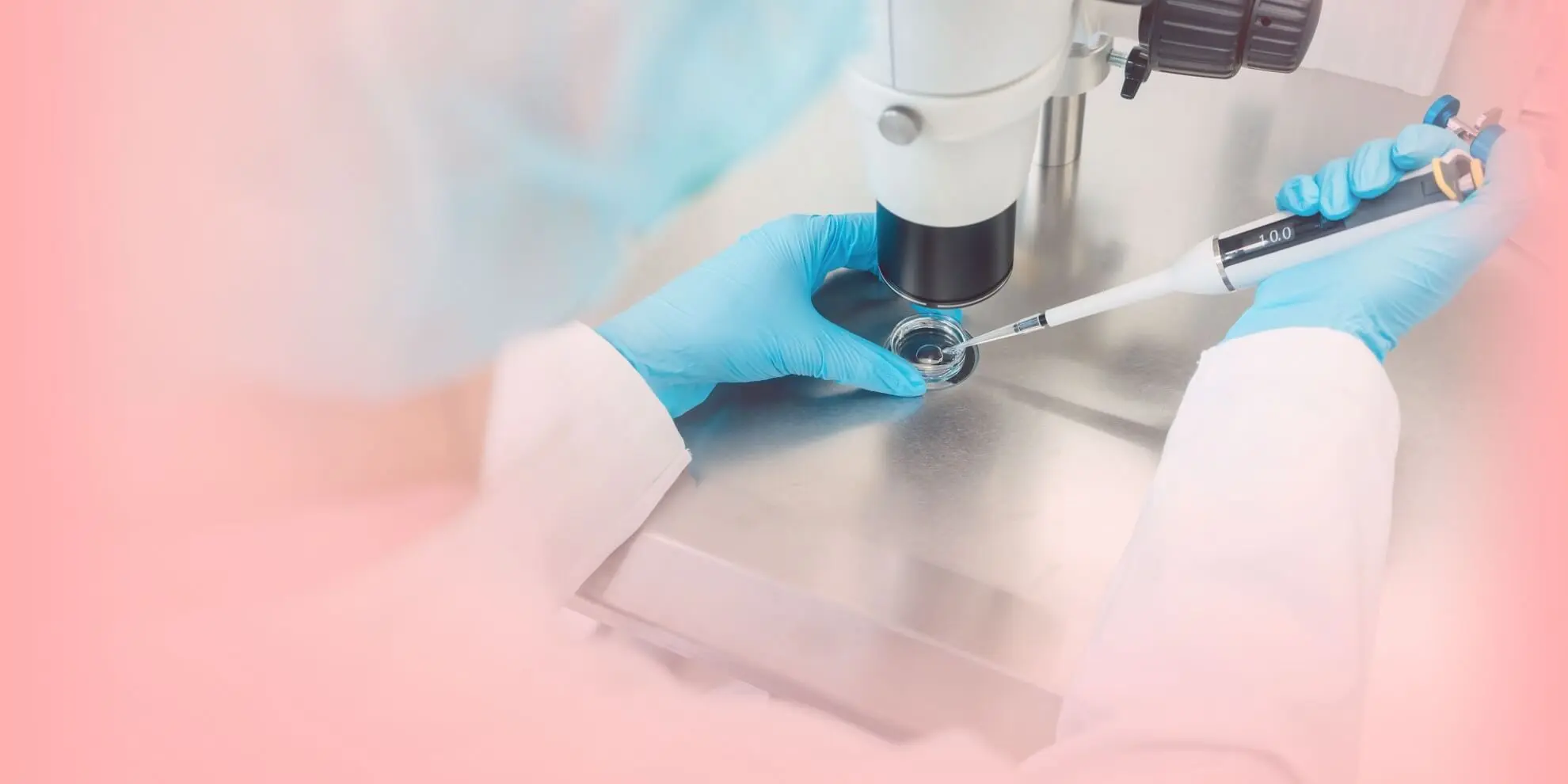
Fertility declines with age, and the decline accelerates after 35 — not because of anything you've done, but because egg quality and chromosomal accuracy both drop year on year. That's the reason we recommend IVF with PGT-A for patients in this age group: it's a combination of well-established, clinically validated techniques designed to raise the chance of a successful transfer while cutting down the number of cycles — and the emotional and financial cost that comes with each one.
IVF with PGT-A pairs standard in-vitro fertilisation with Preimplantation Genetic Testing for Aneuploidy — a lab analysis that checks each embryo's chromosome count before transfer. Embryos with the wrong number of chromosomes (aneuploid embryos) are the leading cause of failed implantation, miscarriage, and conditions such as Down, Turner or Klinefelter syndrome. By identifying and excluding these embryos, we lower the risk of pregnancy loss and increase the likelihood of a healthy birth.
We built this pathway because patients keep telling us the same thing: they don't just want a pregnancy, they want the best possible odds of a healthy one, and they want to reach it with as few cycles as possible. IVF with PGT-A is our answer to that.
Shortens time to pregnancy
Reduces the number of embryo transfers needed
Lowers the miscarriage rate
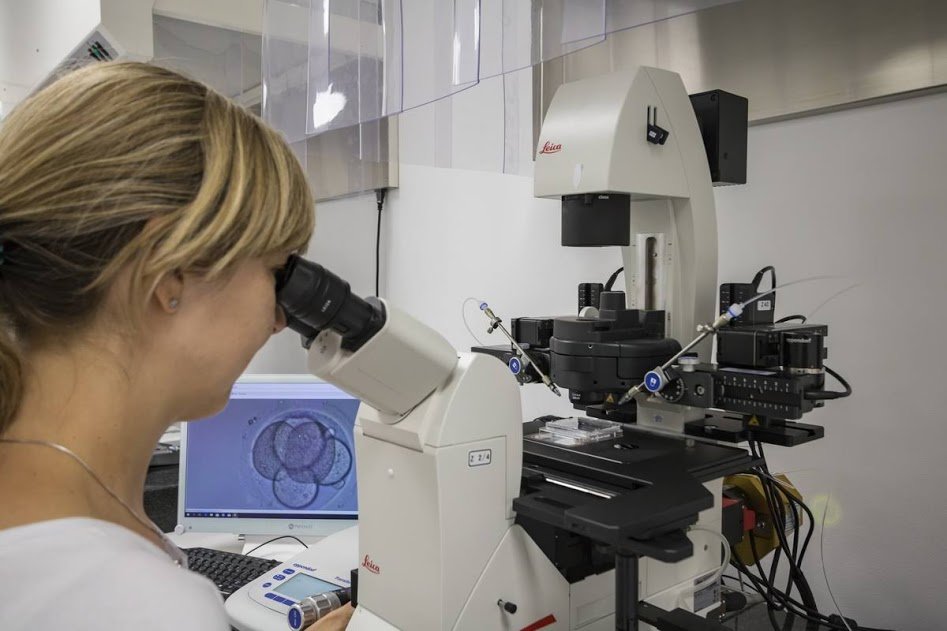
IVF with PGT-A is generally indicated for:
Women over 35
Patients who have been through two or more unsuccessful assisted reproduction cycles
Patients who have experienced two or more miscarriages of unexplained cause
Patients with a history of chromosomal abnormalities in a previous pregnancy, particularly following fertility treatment
Couples where the male partner's sperm analysis shows meiotic abnormalities or a low sperm count
Embryo selection is only as good as the test behind it. PGT[A]Seq, the test used across the group, relies on next-generation sequencing (NGS) to check the number of copies of each of the 23 chromosome pairs in cells taken from the embryo biopsy. Beyond chromosome count, it also detects thousands of variations in the embryo's DNA sequence (polymorphisms), which allows it to flag chromosomal abnormalities that standard PGT-A methods would miss — including triploidy, a frequent but easily-missed cause of miscarriage.
High accuracy in chromosome-count analysis
A reliable yield of informative, euploid embryos
Better clinical outcomes downstream
Fewer inconclusive (mosaic) results
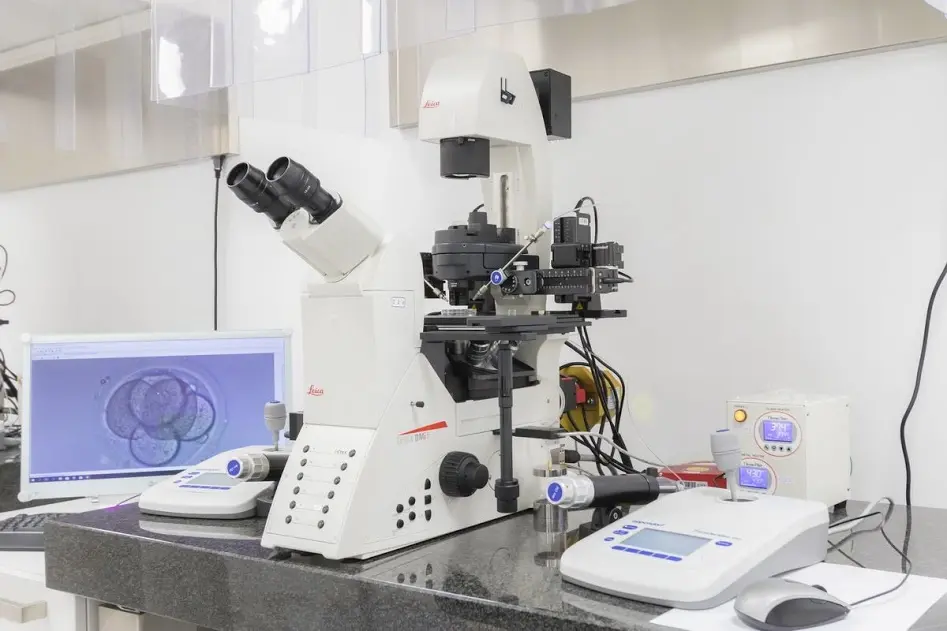

Preimplantation testing lets us detect chromosomal changes (PGT-SR), abnormal chromosome counts (PGT-A) or single-gene conditions (PGT-M) before transfer. By identifying genetic issues at the embryo stage and transferring only the embryos with the best profile, we reduce the risk of miscarriage and increase the likelihood of a healthy birth.


What technology is used to screen embryos for chromosomal abnormalities (PGT[A]Seq)?
PGT[A]Seq uses the latest advances in DNA sequencing technology to screen for chromosomal abnormalities. It measures each chromosome's DNA content with high precision — determining copy number for the embryo's full set of 23 pairs — while also detecting thousands of DNA-sequence variations (polymorphisms) in the same sample. That additional layer of information helps flag chromosomal abnormalities that conventional PGT-A would miss, including triploidy, a common cause of miscarriage. This combination has been shown to give clinically useful predictive information about an embryo's likelihood of leading to a healthy birth.
Does the transfer have to happen in the same cycle as the biopsy?
No — embryos are frozen first. Once results are in, the transfer is scheduled, which lets us choose the optimal timing and prepare the uterus properly rather than rushing a fresh transfer.
Can frozen embryos be transferred to FertiCare from another country for genetic testing?
Embryo transport between countries is generally possible but subject to strict conditions, including the legal framework of both the origin and destination country — for example, in cases involving donor gametes under an identifiable or non-identifiable donation model. Because the rules vary significantly by country, each case is reviewed individually.
When is PGT-A worth doing, and how many embryos does it require?
PGT-A tends to be worthwhile when there's an elevated risk of chromosomal issues — for example, due to age or a history of repeated miscarriage. It allows us to select specifically for embryos with a normal chromosome set. How many embryos are needed varies by individual case, and we discuss this transparently with you beforehand.
Choose one of our fertility clinics in the Czech Republic and request information with no obligation.
We can help finance your treatment — ask about the conditions at your clinic.












 <
<